How to Foster a Strength-Based Culture When Leading Teams in Australia in 4 STEPS
How to Foster a Strength-Based Culture When Leading Teams in Australia

Strengths-Based Company Cultures: The Competitive Edge
Strengths-based cultures consistently outperform others. It’s staggering to know that More Than 90% of Fortune 500 Companies Have Used CliftonStrengths.
Why? Employees thrive when they can contribute to organisational outcomes by doing what they do best every day. What’s more powerful is that when team members collaborate and leverage each other’s strengths, magic happens. This synergy reduces friction and inspires teams to accomplish tasks as a cohesive whole.
Imagine a complex puzzle. Some pieces are perfect for the edges,
Others are for the center.
And some are oddly shaped.
Understanding each piece’s strengths makes the puzzle click into place beautifully and quickly.

A team is like that puzzle. Each person brings unique strengths – some excel at initiating projects, others at details, and some have unexpected skills. When you understand everyone’s strengths, your team works seamlessly to achieve goals, just like a perfectly completed puzzle.
Organisations focusing on employee strengths tend to be more productive.
Leveraging these strengths significantly boosts employee and customer engagement and overall prosperity.
Gallup studies show that there’s a 29% increased profits in companies where Strength-based development is achieved.
In the competitive landscape of Australian workplaces and all around the world, building successful teams needs to go beyond qualifications and resumes.
We all have unconscious biases when we recruit, often hiring people similar to ourselves. This can lead to a lop-sided team. For example, if you’re a manager who excels at big-picture thinking, you may naturally gravitate toward others who share this trait. The result? A team that’s strong on ideas but lacks the detail-oriented members needed to execute and make those ideas a reality. This imbalance can hinder your team’s overall effectiveness and success.
The Power of Strengths Mapping for Team Building
Imagine inheriting a team and being able to map out who excels in which areas. You can strategically pair team members who soar with their innate strengths and complement each other’s abilities. Think about how much time and recruitment costs you could save with these insights. This article states that The real cost of a new hire, in terms of time and money, can be more than 50% of a person’s salary.
The strengths-based approach ensures that your team works harmoniously and effectively, maximising productivity and engagement. Additionally, imagine using this insight to promote future leaders who naturally excel in the relationship domain, ensuring strong, empathetic leadership within your team.
The Power of Strengths Mapping for Team Building
This comprehensive guide dives deep into the power of fostering a strength-based culture for leading teams in Australia. We’ll explore the “why” and “how” behind this approach, providing you with the knowledge and tools to transform your team dynamic.

Creating a workplace where employees feel valued for their unique talents and their strengths are leveraged to achieve incredible results isn’t a utopian dream; it’s the reality fostered by a strengths-based approach to leading teams. Australians value a strong sense of “mateship” at work. A strength-based approach fosters this by celebrating individual contributions and acknowledging everyone’s unique talents.
Here’s the science behind it:
Employee Engagement Soars: A study found that Australian organisations with a strong focus on employee strengths experienced a 21% increase in profitability. Happy, engaged employees are more productive, creative, and less likely to leave.
Performance Takes Flight: Teams focusing on strengths experienced a 12.5% increase in productivity, according to Gallup’s research By aligning tasks with individual strengths, you can unlock a team’s true potential.
Retention Becomes a Breeze: A Deloitte study revealed that 87% of employees say being good at what they do is a very important aspect of a job. A strength-based approach empowers your team and fosters a sense of belonging, reducing unwanted turnover.
Leading teams isn’t about creating cookie-cutter employees; it’s about harnessing the unique strengths of each individual. By focusing on strengths, you build a team that’s more than the sum of its parts. It can take on any challenges and stand out fulfilling the steps required for its success.
4 Steps to Foster a Strength-Based Culture for Leading Teams
Now that you’ve grasped the power of a strength-based culture, let’s translate that knowledge into action! Here’s a practical roadmap to guide you in fostering this empowering environment within your workplaces:

Step 1: Lay the Foundation – Leadership Buy-In & Team Awareness
Building a strength-based culture starts with a unified vision. Imagine your team as a high-performing Australian cricket team – each player with unique strengths, but all working together towards a common goal. To win the World Cup.
To achieve this, leadership commitment is crucial. Clearly communicate the vision and benefits of a strength-based approach to your team. Ensure everyone understands how this shift will empower individuals, bolster collaboration, and lead to team success.
Once the vision is set, ignite the spark within your team. It’s crucial to have team discussions about the concept of strengths. Here’s what you can do:
Organise workshops: Get in touch with a certified Gallup Strengths Coach aka – Khanh Vu to run an introduction to strengths workshop for your team. Why not start at the leadership level first so that your leaders have a framework to buy-in and spread the awareness of the strength to their team.
Utilise the CliftonStrengths assessment: This tool takes way the guess work, reduces unconscious biases and facilitate individual strength identification. Your certified coach can leverage this tool to map out the strengths of your team. See the image below.
This is how a Strengths grid looks like.
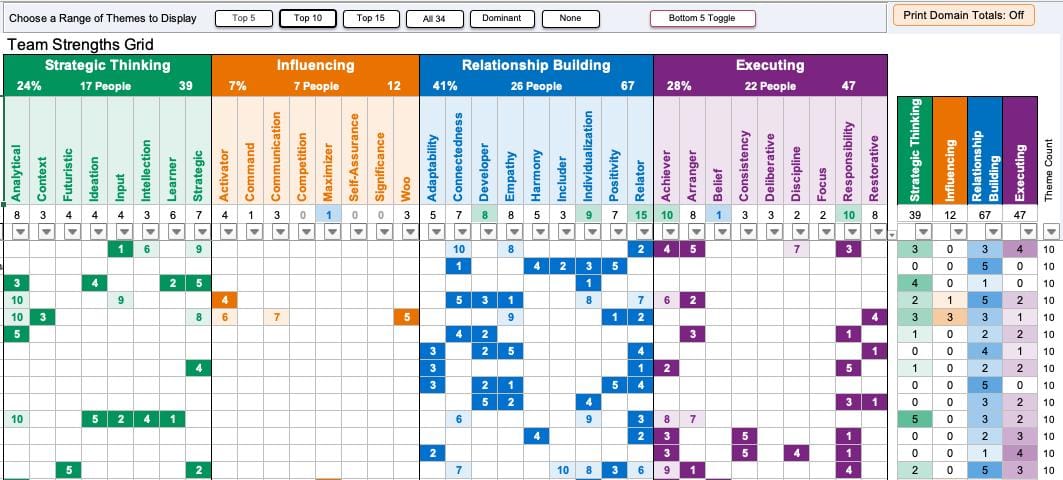
Encouraging open communication and a collaborative environment where everyone feels comfortable sharing their unique talents. This initial exploration will pave the way for the next steps in building a thriving strength-based team.
Step 2: Building a RACE CAR – Identifying Individual Strengths
Imagine you’re building a $3 million (USD) car like the red Koenigsegg Jesko. (The image was taken for this article.)
You wouldn’t assign tasks randomly and hope for the best. You need specialists for each component: experts for the engine, aerodynamics, and design, ensuring optimal performance.

Similarly, CliftonStrengths acts as a high-tech diagnostic tool, identifying each team member’s strengths. This enables you to build a high-performing team by focusing on what’s right about people and aligning roles to their innate talents.
Continuous strength-based training and development are crucial for optimal performance. This approach empowers each member to contribute their best expertise, creating a cohesive, efficient, and high-performing team. (Here are TOP 5 strategies for LEADING TEAMS)
We offer a comprehensive CliftonStrengths assessment to identify your team’s strengths, allowing you to build your dream race car with a high-performing team!
To build a high-performing team, a strong servant leader is essential. At Satori Connect, we refer to this as a Kintsugi Leader—someone who is self-aware and accepts their imperfections, or lesser strengths, to create a stronger workplace. By owning and articulating their weaknesses, they can better embrace their strengths. This self-awareness helps leaders hire and bring in team members who complement their weaknesses, leveraging the team’s collective strengths to create a more robust work environment.
Step 3: Fueling Collaboration – Communication & Recognition
Imagine a brainstorming session where the “ideator” sparks creative ideas or solutions to a problem, and the “arranger” structures them into a cohesive plan working with a stakeholder who has impeccable communication skills to enroll others into taking ownership to execute the plan.
As a manager, knowing who to involve in a situation can make the difference between a successful outcome and a failure. Enhance your effective communication skills to ensure everyone feels heard by leveraging diverse perspectives for innovative solutions.

Just as important as effective communication, recognition in the workplace is a powerful tool for fostering a positive environment, boosting morale, and increasing employee engagement. However, not everyone likes public recognition; it depends on the individual. Tailoring recognition to personal preferences is essential.
Some may prefer public acknowledgment, while others might appreciate private praise or tangible rewards. The wrong style of recognition can have an unintended negative impact. By understanding and respecting individual preferences, managers can ensure that recognition is meaningful and effective, leading to higher job satisfaction and improved performance.
Did you know 87% of employees expect their employer to support them in balancing work and personal commitments? With burnout on the rise, we at Satori Connect focus on elevating the five areas of workplace well-being: Career, Social, Financial, Physical, and Community. By leveraging strengths in each area, we help employees thrive both professionally and personally. Our holistic approach ensures that individuals feel supported and empowered, reducing burnout and enhancing overall well-being.
Managers who provide the right recognition and support their team members in balancing work and personal commitments through individualized communication will find that their teams become loyal and engaged. It’s often said: that people join companies but leave bad managers. By focusing on personalized recognition and support, managers can foster a more loyal and productive team. Read our blog on How to be a Better Manager. Stop making these 7 Common Manager Mistakes.
Step 4: Continuous Growth: Fostering a Strengths-Focused Mindset
3. Strengths-Based Feedback and Development
Ditch the “Good Job” – Leading with Recognition and Feedback in Australia
4. Continuous Learning with Strengths: Learning that Lights you & your team up.
Think of learning and development (L&D) as the gym for your team’s strengths. We all know the importance of exercise, but wouldn’t it be more fun if you could target specific muscles and actually enjoy the workout?
That’s the power of a Strength-Based L&D approach!
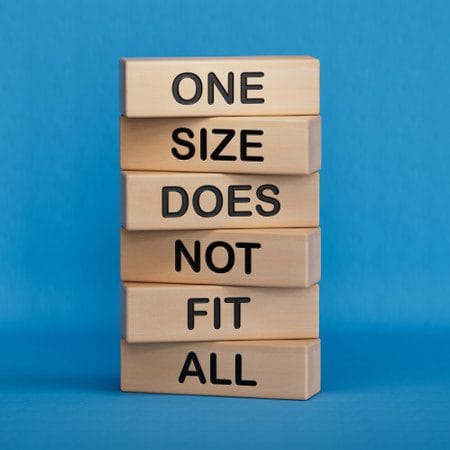
Ditch the one-sise-fits-all training and focus on what energises your team.. In fact one-sise-fits-all is a MASSIVE MANAGER MISTAKE which you must avoid to build your high-performing team dream.
For example, support your public speaking expert with a course, or find a fun online data visualisation workshop for your brainstorming guru who struggles with spreadsheets.
We can even apply Strength Gamification to make it more fun & engaging for everyone to collaborate.
Focus on building existing strengths while adding complementary skills to create a well-rounded, supportive team.
5. Measuring and Celebrating Success – The Strengths Way.
How to Know the Success of Your Strength-Based Team Strategy:
Engagement Explosion: Are your meetings livelier? Are your team members jumping in with ideas and taking ownership of projects? That’s engagement on steroids – a sure sign the focus of your strength is hitting the mark.
Productivity Powerhouse: Is your team churning out work faster and with better results? Strengths-based teams tackle tasks with their natural talents, leading to a serious productivity boost.
Achievement All-Stars: Are you celebrating more wins and hitting those project milestones with ease? A strengths-based approach helps teams leverage their collective power for stellar achievements.

Remember, leading with strengths isn’t about micromanaging results.
It’s about creating an environment where your team can truly shine.
By tracking these success signals, you’ll know your strengths-based strategy is on the right track, leading to a happy, higher thriving and higher-performing team, with way more high fives delivered.
Conclusion
Implementing strength-based leadership strategies is a powerful way to lead teams in Australia and grow a positive work environment. Leaders can build high-performing teams by focusing on strengths.Aligning strengths with roles isn’t a one-time event; it’s an ongoing journey that continuesly embraces your team’s potential, focuses on strengths, celebrates wins, and empowers growth to make your team the best version of themselves.
If you need support, we offer dedicated team-building services for Teams as well as individuals.
By following these steps, you’ll unlock a powerful formula for success:
Engaged individuals + Strategically utilised strengths = a High-performing team.
And in case, you don’t want to do it alone and without any experience, we have dedicated team-building services for Teams as well as individuals.
FAQs
1. What are the benefits of using a strength-based approach in team leadership?
A strength-based approach enhances team performance by leveraging individual strengths, leading to increased productivity, job satisfaction, and reduced turnover rates. It fosters a positive work environment where team members feel valued and motivated to contribute their best.
2. How can I identify the strengths of my team members?
The most direct and effective assessment to gain a Strengths DNA grid for your team is to use the CliftonStrengths assessment where you can choose either a report revealing a team member’s Top 5 strengths or a full comprehensive 34.
3. How do I align team member strengths with their roles?
Customise job roles to fit individual strengths, assign projects based on these strengths and remain flexible to adjust roles as needed. This ensures team members are in positions where they can excel and contribute effectively.
4. What are some effective ways to foster a strength-based culture?
Promote a strength-based culture by incorporating discussions about strengths into team meetings, leveraging it as a part of your onboarding program, establishing recognition programs, and encouraging continuous learning focused on enhancing individual strengths. This creates a supportive and motivating work environment.
5. How can I measure the success of strength-based strategies?
Measure success by developing key performance indicators (KPIs) that reflect the outcomes of strength-based initiatives, conducting regular performance development reviews, and organising events to celebrate achievements. This helps maintain momentum and demonstrate the value of strength-based leadership.
BONUS:
Explore Sienna’s journey of resilience and self-discovery, as she overcomes career challenges and reignites her passion through the ‘Discover your ME’ program.